
- Cesium 133 In Isotopic Notation
- Cesium 133 Watch
- Cesium 133 Radiation
- Cesium 133 Neutrons
- Cesium 133 Second
- Cesium 133 Atomic Watch
- Cesium-133 Element
- Cesium-133 is the brainchild of a CMU STEM drop out and a UC Berkeley MSc graduate with a common interest in the global financial market.
- 132.905429 (7) 100. Isotope abundances of caesium. In the above, the most intense ion is set to 100% since this corresponds best to the output from a mass spectrometer. This is not to be confused with the relative percentage isotope abundances which totals 100% for all the naturally occurring isotopes.
- Caesium-133 is the only stable isotope of caesium. The SI base unit the second is defined by a specific caesium-133 transition. Since 2019, the official definition of a second is.
Solid-state cesium NMR references
- J. Schneider, J. Tsuchida, and H. Eckert
Cation size effects in mixed-ion metaphosphate glasses: structural characterization by multinuclear solid state NMR spectroscopy,
Phys. Chem. Chem. Phys.15, 14328-14339 (2013).
Abstract - Thorsten Goebel, Alim Ormeci, Oliver Pecher, and Frank Haarmann
The silicides M4Si4 with M = Na, K, Rb, Cs, and Ba2Si4 – NMR spectroscopy and quantum mechanical calculations,
Z. Anorg. Allg. Chem.638, 1437-1445 (2012).
Abstract - C. Martineau, V. K. Michaelis, S. Schuller, and S. Kroeker
Liquid-liquid phase separation in model nuclear waste glasses: A solid-state double resonance NMR study,
Chem. Mater.22, 4896-4903 (2010).
Abstract - S. Kroeker, C. S. Higman, V. K. Michaelis, N. B. Svenda, and S. Schuller
Precipitation of mixed-alkali molybdates during HLW vitrification,
Mater. Res. Soc. Symp. Proc.1265, AA03-03-09 (2010).
Abstract - V. K. Michaelis and S. Kroeker
Caesium volatilisation in borosilicate glasses: a multinuclear magnetic resonance study,
Phys. Chem. Glasses50, 249-252 (2009). - Catherine J. Reinhold, Paul A. Anderson, Peter P. Edwards, Victor V. Terskikh, Christopher I. Ratcliffe, and John A. Ripmeester
Cs NMR and ESR studies of cesium-loaded LiX and LiA zeolites,
J. Phys. Chem. C112, 17796-17803 (2008).
Abstract - Vladimir K. Michaelis, Pedro M. Aguiar, and Scott Kroeker
Probing alkali coordination environments in alkali borate glasses by multinuclear magnetic resonance,
J. Non-Cryst. Solids353, 2582-2590 (2007). - K. R. Whittle, G. R. Lumpkin, and S. E. Ashbrook
Neutron diffraction and MAS NMR of Cesium Tungstate defect pyrochlores,
J. Solid State Chem.179, 512-521 (2006). - T. Gullion and A. J. Vega
Measuring heteronuclear dipolar couplings for I=1/2, S > 1/2 spin pairs by REDOR and REAPDOR NMR,
Prog. Nucl. Magn. Reson. Spectrosc.47, 123-136 (2005). - R. B. Ejeckam and B. L. Sherriff
A 133Cs, 29Si, and 27Al MAS NMR spectroscopic study of Cs adsorption by clay minerals: Implications for the disposal of nuclear wastes,
Can. Mineral.43, 1131-1140 (2005). - J. Mon, Y. J. Deng, M. Flury, J. B. Harsh
Cesium incorporation and diffusion in cancrinite, sodalite, zeolite, and allophane,
Microporous Mesoporous Mater.86, 277-286 (2005). - E. J. Lima, I.A. Ibarra, M. A. Vera, V. H. Lara, P. Bosch, and S. Bulbulian
I. Cesium leaching in CsA and CsX zeolites,
J. Phys. Chem. B108, 12103-12110 (2004). - C. A. Click, R. K. Brow, and T. M. Alam
Properties and structure of cesium phosphate glasses,
J. Non-Cryst. Solids311, 294-303 (2003). - Anil Kumar, K. V. Ramanathan, T. S. Mahesh, Neeraj Sinha, and K. V. R. Murali
Developments in quantum information processing by nuclear magnetic resonance: Use of quadrupolar and dipolar couplings,
Pramana – J. Phys.59, 243-254 (2002). - V. Luca, J. V. Hanna, M. E. Smith, M. James, D. R. G. Mitchell, J. R. Bartlett
Nb-substitution and Cs+ ion-exchange in the titanosilicate sitinakite,
Microporous Mesoporous Mater.55, 1-13 (2002). - M. Hunger, U. Schenk, and A. Buchholz
Mobility of cations and guest compounds in cesium-exchanged and impregnated zeolites Y and X investigated by high-temperature MAS NMR spectroscopy,
J. Phys. Chem. B104, 12230-12236 (2000). - J. Skibsted, T. Vosegaard, H. Bildsoe, and H. J. Jakobsen
133Cs chemical shielding anisotropies and quadrupole couplings from MAS NMR of cesium salts,
J. Phys. Chem.100, 14872-14881 (1996). - W. P. Power, S. Mooibroek, R. E. Wasylishen, and T. S. Cameron
Cesium-133 single-crystal NMR study of cesium chromate,
J. Phys. Chem.98, 1552-1560 (1994). - W. P. Power, R. E. Wasylishen, S. Mooibroek, B. A. Pettitt, and W. Danchura
Simulation of NMR powder line shapes of quadrupolar nuclei with half-integer spin at low-symmetry sites,
J. Phys. Chem.94, 591-598 (1990).
Related bibliography

- M. Gutjahr, R. Böttcher, and A. Pöppl
133Cesium HYSCORE investigation of the di-tert-butyl nitroxide--Cs+ adsorption complex in CsNaY zeolite,
J. Phys. Chem.107, 13117-13122 (2003).
More solid-state Cs-133 NMR references.
133 Cs Electron configuration Xe 6s 1 CAS number: 7440-46-2 ChemSpider ID: 4510778: ChemSpider is a free chemical structure database. How to unlock the Cesium-133 crystal achievement in Agatha Christie - The ABC Murders: Tidy up three times. This achievement is worth 50 Gamerscore.
Sorry, Energy Education does not support your browser version. Please switch browsers or upgrade Internet Explorer to version 8 or above to view this website properly.
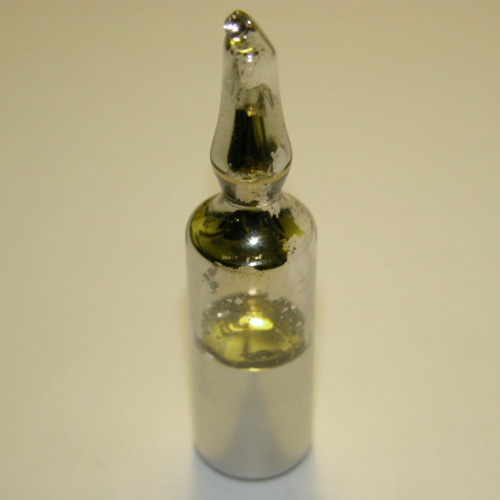
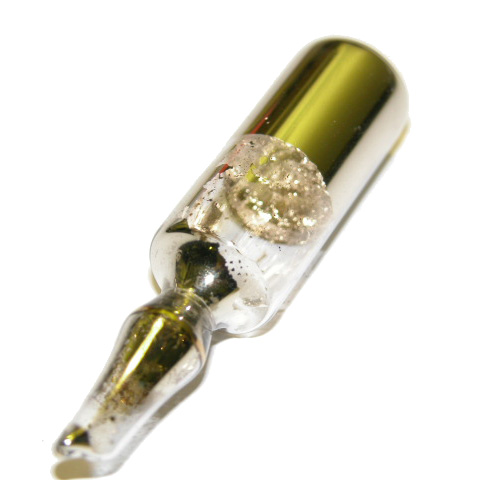
Cesium is the 55thelement on the periodic table of elements. Cesium is the standard for atomic clocks, and actually provides the definition for the second! Some of its properties are listed below:[2]
| Atomic weight | 132.90545196 |
| Density (at 20°C) | 1.9 g/cm3 |
| Boiling point | 944 K |
| Melting point | 301.59 K |
- 1Cesium defining our unit of time
Cesium 133 In Isotopic Notation
Cesium defining our unit of time
Our most common unit of time, the second, was originally defined based on the Earth's rotation; the Earth rotates around its axis once per day, with the second being defined as 1/86,400 of a (mean solar) day.[3] Aside from the fact that there are different definitions for what a 'day' is, using the Earth's rotation as a definition for time is not practical due to irregularities in the frequency of its rotation.
Cesium 133 Watch
Nowadays, Cesium-133 is used as the definition for the second due to the reliable frequency of microwave it emits. The definition is: Eddie lacy.
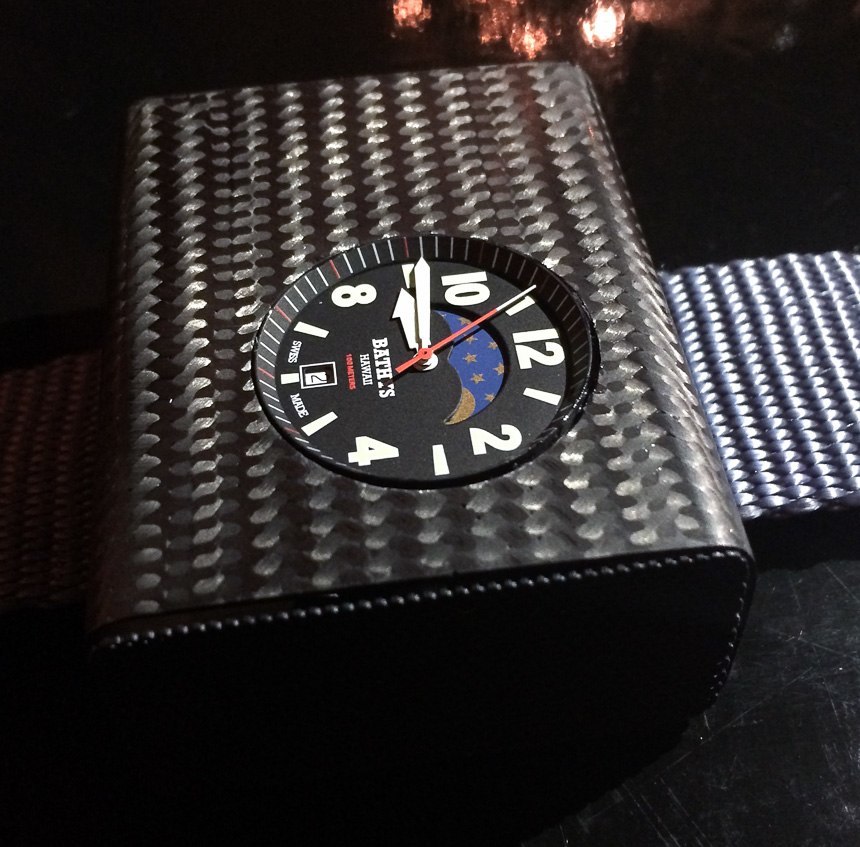
The second is the duration of 9,192,631,770 periods of the radiation corresponding to the transition between the two hyperfine levels of the ground state of the caesium 133 atom.[3]
In simpler terms, radiant energy, or light, in the form of microwaves is emitted at a very precise frequency from this particular atomic transition. Upon observing exactly 9,192,631,770 periods (or cycles) of this electromagnetic wave, a second is said to have passed.
Note that this frequency occurs when the Cesium-133 atom is in isolation at absolute zerotemperature; in reality corrections for this are necessary.[3] Still, the atomic clocks using Cesium keep time within an accuracy of 2 to 3 parts in 1014: this means it may only lose a second once every 1.4 million years![4]
To learn more about the science of Cesium clocks, visit Hyperphysics.
Applications
There are many immediately practical uses for extremely accurate clocks. Perhaps the most important is in Earth's Global Positioning System (GPS), which require atomic clocks to provide accurate measurements of distance. They also provide a reliable time reference in scientific research applications, such as measuring variations in the frequencies of pulsars. Cesium clocks have also provided the accuracy necessary to test General Relativity, since an atomic clock operating high above the Earth's surface in a satellite will tick faster than one operating on the ground.[5]
Video
Cesium 133 Radiation
The video below is from the University of Nottingham's periodic videos project.[6] They have created a complete suite of short videos on every element on the periodic table of elements.
References
Cesium 133 Neutrons
- ↑Made internally by a member of the Energy Education team, with information from It's Elemental (Jefferson Lab), Available: https://education.jlab.org/itselemental/ele055.html
- ↑Jefferson Lab, The Element Cesium [Online], Available: https://education.jlab.org/itselemental/ele055.html
- ↑ 3.03.13.2Bureau International des Poids et Mesures (BIPM). 'Unit of time (second)', SI Brochure, Sec.2.1.1.3 [Online], Available: https://www.bipm.org/en/publications/si-brochure/second.html
- ↑United States Naval Observatory. 'Cesium Atoms at Work', Time Service Department [Online], Available: http://tycho.usno.navy.mil/cesium.html
- ↑Hyperphysics. 'Atomic Clocks' [Online], Available: http://hyperphysics.phy-astr.gsu.edu/hbase/acloc.html
- ↑See more videos from the University of Nottingham on different elements here: http://www.periodicvideos.com/
Cesium 133 Second
Cesium 133 Atomic Watch
Authors and Editors
Cesium-133 Element
Bethel Afework, Jordan Hanania, Braden Heffernan, James Jenden, Jaafer Khani, Kailyn Stenhouse, Jason Donev
Last updated: June 4, 2018
Get Citation